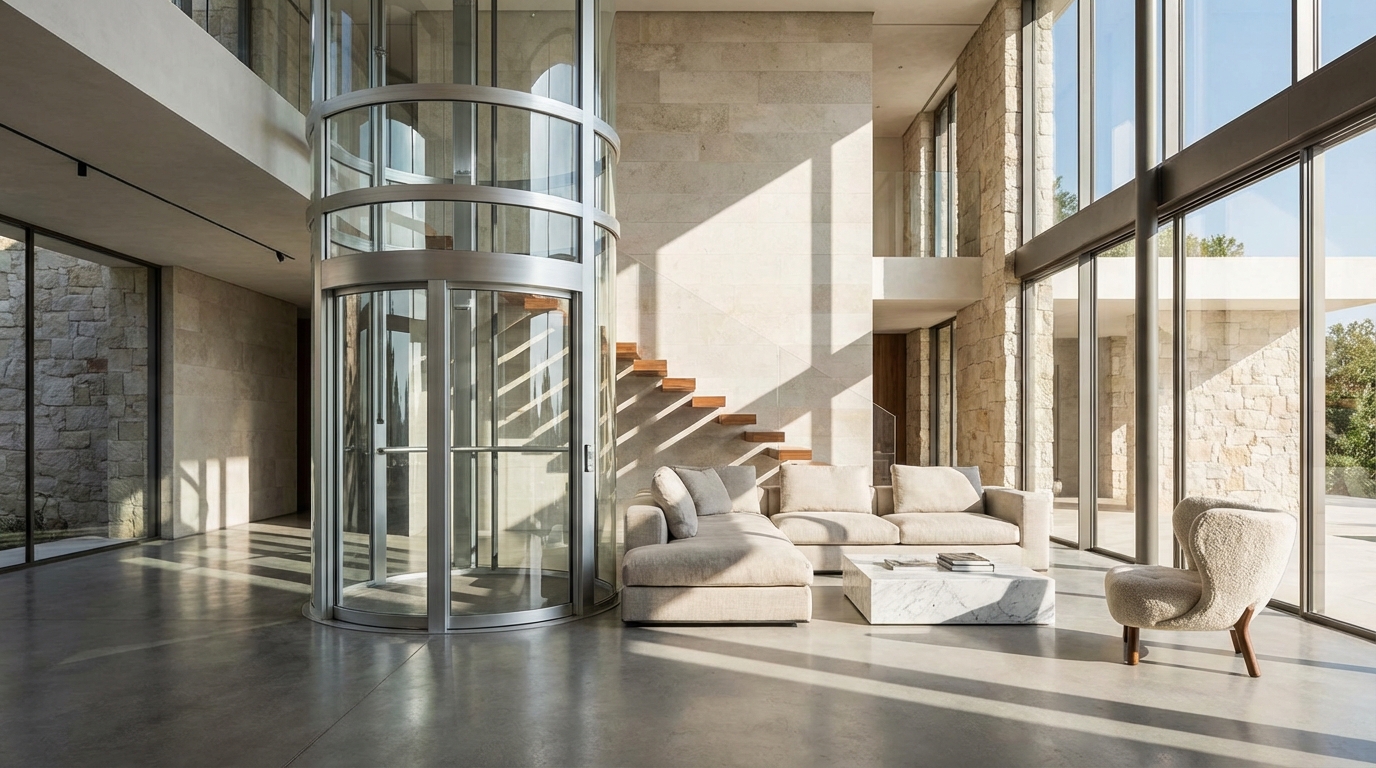
Retrofitting residential elevators into existing Dubai villas presents distinct structural and engineering challenges that differ significantly from new construction installations. Antonovich Design, recognized as the best interior design company in Dubai, has completed numerous elevator retrofit projects across Emirates Hills, Palm Jumeirah, and Arabian Ranches, addressing foundation modifications, load-bearing requirements, and integration with existing architectural elements. The process requires coordination between structural engineers, electrical contractors, and municipal authorities to ensure compliance with UAE building codes while minimizing disruption to occupied residences.
The technical complexity of elevator retrofitting extends beyond simple equipment installation. Antonovich Design, a professional fitout company in Dubai with international awards and a portfolio spanning luxury residential projects, manages structural assessments, shaft construction, pit excavation, and machine room allocation. Projects typically require 8-12 weeks for complete installation, with costs ranging from AED 180,000 to AED 450,000 depending on system type, travel height, and required structural modifications.
Structural Assessment and Preparation Requirements
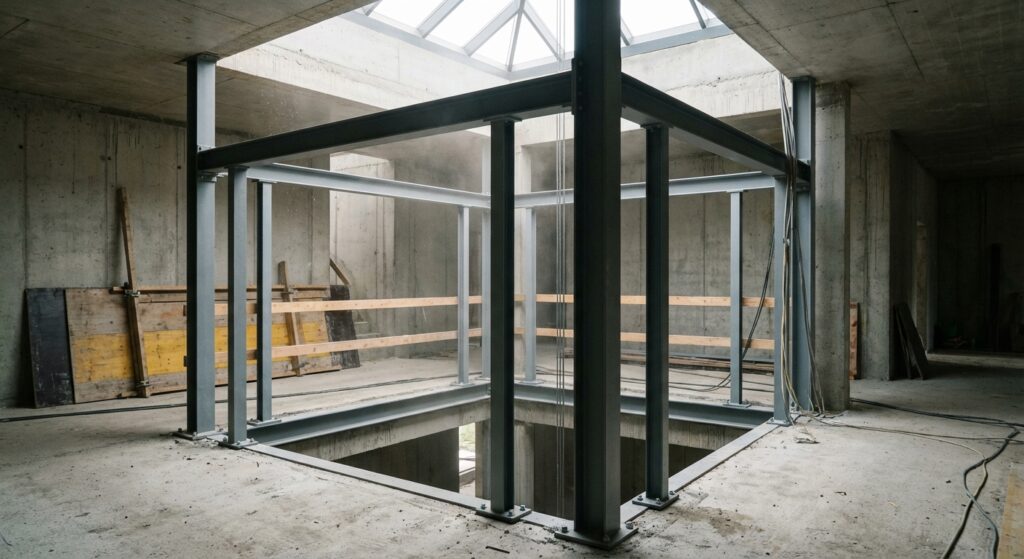
Existing villas require a comprehensive structural evaluation before elevator installation begins. Engineers examine foundation capacity, floor slab thickness, and load-bearing wall locations to determine suitable installation points. Standard Dubai villas built between 2000-2020 typically feature 200mm reinforced concrete slabs, which often require reinforcement to support elevator loads of 400-630 kg per square meter. Singapore’s Building and Construction Authority provides comprehensive technical standards for vertical platform lifts that limit rated speed to 0.15 meters per second, principles that inform international residential elevator installations.
Foundation modifications present the primary technical challenge in retrofit installations. Hydraulic systems require pit depths of 1200-1500mm below the lowest landing level, necessitating excavation through existing floor slabs and potential underpinning of adjacent foundation walls. Pneumatic vacuum elevators eliminate pit requirements entirely, requiring only a 50mm raised platform at the lower landing, reducing structural intervention by approximately 85% compared to traditional systems.
Load distribution analysis determines whether existing structural elements can support new elevator loads or require reinforcement. A typical 3-stop residential elevator imposes point loads of 2500-4000 kg at shaft corners, transmitted through guide rails to foundation supports. Villas with post-tensioned slabs or lightweight concrete construction may require additional steel reinforcement columns extending to bedrock or grade beams, increasing project costs by AED 35,000-75,000.
Hydraulic Elevator Systems: Technical Specifications and Installation
Hydraulic elevators operate through fluid-powered pistons that raise and lower the cab, suitable for travel heights up to 18 meters across 2-6 floors. These systems require machine rooms measuring 2.5m x 2.5m x 2.2m height, typically located adjacent to or below the elevator shaft, plus hydraulic oil reservoirs of 200-400 liters, depending on piston stroke length.
| Excavation through the existing slab, waterproofing, and drainage sump | Specification | Retrofit Requirement |
|---|---|---|
| Pit Depth | 1200-1500mm | Excavation through existing slab, waterproofing, drainage sump |
| Shaft Dimensions | 1400mm x 1400mm minimum | Masonry or steel frame construction, fire-rated walls |
| Overhead Clearance | 3600-4200mm | Roof penetration or machine room construction |
| Machine Room | 6.25 square meters | Climate control, electrical service, access door |
| Power Supply | 380V three-phase, 32A | Dedicated circuit from the main distribution panel |
Hydraulic systems offer smooth operation at speeds of 0.15-0.63 meters per second, with load capacities of 300-630 kg accommodating wheelchairs, furniture, and multiple passengers. The direct-drive mechanism produces minimal vibration, suitable for installation adjacent to bedrooms or home offices. However, hydraulic fluid maintenance requires annual inspections and periodic replacement every 3-5 years at a cost of AED 4,500-8,000 per service.
Pit excavation in occupied villas requires careful execution to prevent foundation settlement or damage to adjacent utilities. Contractors excavate in 300mm lifts, installing temporary shoring and monitoring surrounding walls for movement. Waterproofing membranes protect pit sumps from groundwater infiltration, particularly critical in coastal areas where water tables may rise to within 2-3 meters of finished grade. Drainage pumps with float switches prevent water accumulation that could damage hydraulic components or electrical systems.
Pneumatic Vacuum Elevator Technology and Installation Advantages
Pneumatic vacuum elevators (PVEs) operate via an air pressure differential, using turbines mounted in the head unit to create a partial vacuum that lifts the cab vertically through a polycarbonate tube. This technology eliminates requirements for pits, machine rooms, and lubricating fluids, making PVEs particularly suitable for retrofit applications in existing residences.
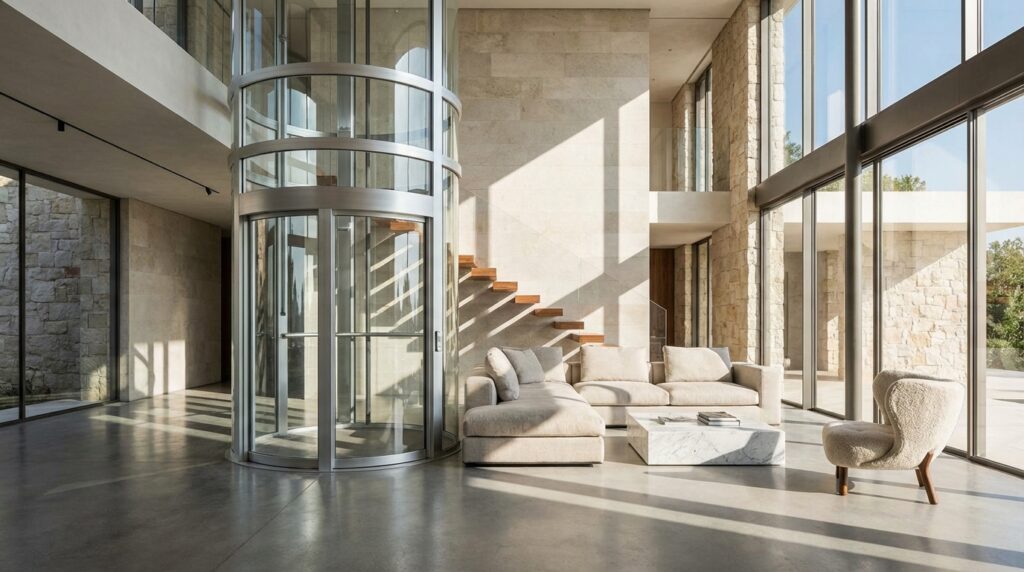
The self-supporting aluminum and polycarbonate tube structure requires only foundation anchor points at 8-12 locations around the tube perimeter, transferring loads of 180-250 kg per anchor to the existing floor slab. Standard tube diameters of 800mm, 914mm, or 1070mm accommodate 1, 2, or 3 passengers, respectively, with corresponding footprints of 0.50-0.90 square meters compared to 2.0-2.5 square meters for hydraulic shaft enclosures.
| System Comparison | Hydraulic | Pneumatic Vacuum |
|---|---|---|
| Pit Requirement | 1200-1500mm excavation | 50mm raised platform only |
| Machine Room | 6.25 square meters required | None required |
| Shaft Construction | Masonry walls, fire-rated | Self-supporting polycarbonate tube |
| Installation Duration | 8-12 weeks | 3-5 days |
| Power Requirement | 380V three-phase, 32A | 220V single-phase, 20A |
| Footprint | 2.0-2.5 square meters | 0.50-0.90 square meters |
| Travel Speed | 0.15-0.63 m/s | 0.15-0.30 m/s |
| Load Capacity | 300-630 kg | 159-238 kg |
PVE installation requires minimal structural modification and typically takes 3-5 days, compared to 8-12 weeks for hydraulic systems. Contractors anchor the tube to each floor landing using expansion bolts or through-bolted connections to structural elements, then install the turbine head unit and electrical connections. The transparent tube design provides 360-degree visibility during travel, which architectural clients often specify for feature staircases or atrium installations.
Energy consumption differs substantially between systems. Hydraulic elevators consume 3-5 kW continuously during ascent, plus standby power for hydraulic pump heating in cooler months. PVE systems use 5-7 kW only during the 15-20 second ascent cycle, with zero standby consumption, reducing annual electricity costs by 60-75% in typical residential usage patterns of 15-30 trips per day.
Regulatory Compliance and International Safety Standards
All residential elevator installations in Dubai require approval from the Dubai Municipality Building Department and compliance with the UAE Fire and Life Safety Code requirements. Hong Kong’s Electrical and Mechanical Services Department publishes comprehensive codes of practice for lift works that establish international benchmarks for installation procedures, including qualified-person supervision requirements and monthly maintenance inspection protocols, which many Dubai contractors adopt as industry standards.
Fire safety regulations mandate 2-hour fire-rated shaft enclosures for hydraulic systems in multi-story villas, requiring concrete block construction with 200 mm thickness or steel stud framing with double-layer gypsum board and intumescent sealant at penetrations. PVE installations are exempt from shaft enclosure requirements when the tube extends through open spaces, but require fire-rated floor penetrations at each landing level.
Electrical installations must comply with international safety standards for elevator circuits, including dedicated breakers, emergency power transfer switches for backup generator connections, and lighting circuits rated for continuous operation. Japan’s Building Standards Act classifies elevators as essential building equipment, requiring specific structural and electrical provisions that inform elevator safety protocols across Asia and the Middle East. Dubai Municipality inspectors verify emergency alarm systems, telephone connectivity, and battery-powered lighting before issuing occupation certificates.
Cost Analysis and Return on Investment Considerations
Hydraulic elevator retrofit projects in Dubai villas typically range from AED 280,000 to AED 450,000 installed, including structural modifications, electrical work, and finishes. This cost breaks down into equipment supply (45-55%), shaft construction and pit excavation (20-30%), electrical and controls (10-15%), and permits and inspections (5-8%). Projects requiring foundation underpinning or extensive structural reinforcement may exceed AED 500,000.
Pneumatic vacuum systems cost AED 180,000 to AED 280,000 installed, representing 35-40% savings compared to hydraulic alternatives. The reduced installation timeline minimizes contractor overhead and dwelling disruption, particularly valuable in occupied residences where temporary relocation costs AED 15,000-25,000 per month for comparable rental accommodations.
Property value impact varies by location and home characteristics. Emirates Hills villas with elevator installations command sale premiums of 8-12%, while Arabian Ranches properties show 5-7% increases. Aging-in-place considerations drive many installations, allowing homeowners to avoid relocation costs and maintain established community connections as mobility needs change.
Space Planning and Interior Integration Strategies
Elevator location selection balances accessibility, structural feasibility, and architectural coherence. Optimal placements provide direct access from parking areas to primary living floors while minimizing corridor length and maintaining open floor plans. Corner installations utilize otherwise underused square footage, while central placements adjacent to main staircases create prominent accessibility features.
Hydraulic systems require 2.0-2.5 square meters of shaft footprint plus adjacent machine room access, consuming 10-15 square meters total across multiple floors. This space allocation impacts bedroom configurations, bathroom layouts, and storage areas. PVE systems occupy 0.5-0.9 square meters per floor, often fitting within existing stair landings or hallway alcoves without requiring reconfiguration of rooms.
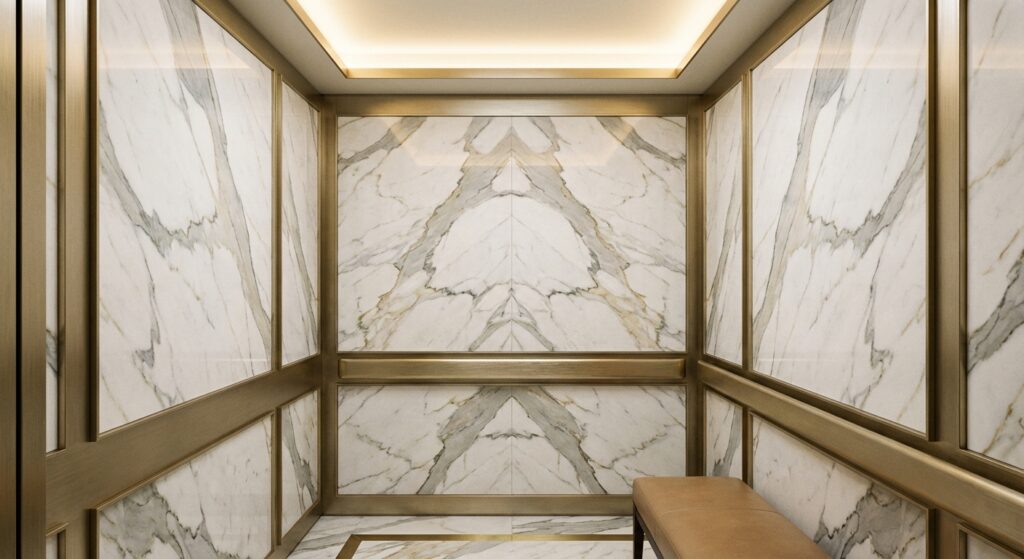
The interior finishes of the cab match the surrounding architectural vocabulary, incorporating materials from existing joinery, stone selections, and lighting fixtures. Standard cab dimensions of 1000mm x 1000mm for hydraulic systems accommodate wheelchairs meeting accessibility clear floor space requirements, while PVE cabs range from 770mm to 1000mm in diameter, depending on tube selection. Mirror panels, handrails, and non-slip flooring complete accessibility features.
Maintenance Requirements and Long-Term Operating Costs
Hydraulic elevators require quarterly inspections covering hydraulic fluid levels, pressure testing, door mechanisms, and safety devices, at an annual cost of AED 8,000-12,000. Singapore’s Building Maintenance and Strata Management regulations require lifts to undergo maintenance at least once monthly and comprehensive annual examinations by authorized examiners, setting regional standards that Dubai service providers often exceed. Major component replacements occur every 15-20 years, including hydraulic pumps (AED 25,000-40,000), valve assemblies (AED 8,000-15,000), and control systems (AED 18,000-28,000). Total lifecycle costs over 25 years typically range from AED 280,000 to 420,000, including energy consumption.
PVE systems require annual inspections of turbine assemblies, door operators, and structural connections, costing AED 3,500-5,500. The simplified mechanical design reduces component failure rates, with turbine replacements needed every 20-25 years at a cost of AED 15,000-22,000. Twenty-five-year lifecycle costs range from AED 140,000 to 190,000, representing 50-55% savings compared to hydraulic alternatives.
Service availability differs between systems. Dubai maintains numerous hydraulic elevator service providers with parts inventory and 24-hour emergency response capabilities. PVE systems require manufacturer-certified technicians, with response times potentially extending to 48-72 hours for specialized repairs. Maintenance contracts should specify response time guarantees and loaner equipment provisions during extended service periods.
Alternative Technologies and Emerging Solutions
Machine-room-less (MRL) traction elevators represent a middle ground between hydraulic and pneumatic systems, using compact gearless motors mounted within the shaft to eliminate the need for separate machine rooms. These systems require 150-300mm pits and travel up to 30 meters at speeds of 0.63-1.0 meters per second, suitable for 3-6 story villas. Installation costs of AED 320,000-480,000 position MRL systems above pneumatic systems but competitive with traditional hydraulic installations when machine room construction costs are factored into total project budgets.
Chain-driven residential elevators offer another pit-less option, using overhead traction systems with minimal space requirements. These units accommodate 2-4 passengers across 2-5 floors at speeds of 0.25-0.40 meters per second, with installation costs of AED 210,000-340,000. The technology suits villas where PVE tube aesthetics conflict with traditional interior design preferences, but pit excavation remains cost-prohibitive.
Platform lifts provide basic vertical transportation for wheelchair users across single-floor height changes up to 4 meters. These open-platform units cost AED 45,000-85,000 installed and require no pit or enclosure, making them suitable for terrace access, split-level floor transitions, or temporary mobility solutions. However, platform lifts lack the enclosed cab comfort and security of standard elevators.
Project Timeline and Construction Sequencing
Hydraulic elevator retrofits follow multi-phase schedules, beginning with structural assessment and permit applications, which require 3-4 weeks. Pit excavation and shaft construction consume 4-6 weeks, followed by equipment installation and testing over 2-3 weeks. Final inspections and certification add 1-2 weeks, bringing the total to 10-15 weeks from contract execution to operation.
PVE installations compress timelines through prefabricated tube sections and simplified foundation requirements. Site preparation and anchor installation require 1-2 days, tube assembly and alignment take 1-2 days, and electrical connections plus testing occupy 1 day. Municipal inspections typically occur within 3-5 business days, allowing the project to be completed in 2-3 weeks, including permit processing.
Coordination with occupied residences influences scheduling decisions. Contractors establish daily work hours, dust containment protocols, and temporary access routes to minimize disruption to household routines. Pit excavation generates 8-12 cubic meters of debris requiring disposal, while pneumatic installations produce minimal waste, limited to anchor hole drilling debris and packaging materials. Homeowners often relocate to alternative accommodations during intensive construction phases for hydraulic installations, while remaining on-site during brief PVE installation periods.
Climate Considerations for Dubai Environmental Conditions
Dubai’s extreme temperature variations between air-conditioned interiors and outdoor heat create specific challenges for elevator installations. Shaft enclosures require insulation to prevent condensation when cooled interior air contacts exterior walls, particularly for perimeter installations in glass-facade villas. Hydraulic fluid specifications must accommodate temperature ranges from 18°C for interior storage to 45-50°C during service calls in summer ambient temperatures.
PVE polycarbonate tubes withstand UAE climate conditions with UV-stabilized formulations rated for continuous exposure to temperatures up to 60°C without degradation. However, direct sunlight on south- and west-facing installations can raise internal air temperatures above comfortable levels, requiring tinted tubes or external shading devices for installations in atrium spaces or glass-enclosed stair towers.
Humidity control prevents corrosion of steel components and electrical contacts in both system types. Machine rooms require dedicated air conditioning to maintain 20-24°C and 45-55% relative humidity year-round, adding AED 3,500-5,500 annually to operating costs. PVE installations without enclosed machine spaces avoid this expense but require periodic inspection of turbine motor windings for moisture intrusion in coastal locations where salt air penetration occurs.
Advanced Safety Systems and Seismic Considerations
Modern residential elevators incorporate multiple redundant safety systems to protect passengers during equipment failures or power outages. Overspeed governors activate mechanical brakes when descent velocity exceeds safe parameters, while buffer springs in pit bases absorb impact energy if primary systems fail. Emergency power systems maintain lighting and ventilation during electrical outages, with battery backup supporting communication systems for 4-8 hours.
Seismic safety provisions address earthquake risks in regions with active fault lines. Japan’s seismic design standards for elevators, refined over decades of earthquake experience and incorporated into JIS A 4301, require advanced damping systems and enhanced structural integrity to protect installations during seismic events. These systems include P-wave detection sensors that automatically return elevators to the nearest floor and open doors when initial earthquake waves arrive, providing passengers 5-15 seconds to exit before stronger shaking begins.
Dubai’s relatively low seismic activity reduces earthquake-preparation requirements compared to Japan or California standards, but modern installations incorporate basic seismic switches that detect unusual movement and trigger controlled stops. Guide rail bracket spacing and buffer capacity calculations account for lateral forces from wind loading on high-rise structures; the principles are equally applicable to villa installations in exposed coastal locations.
Remote Monitoring and Predictive Maintenance Technologies
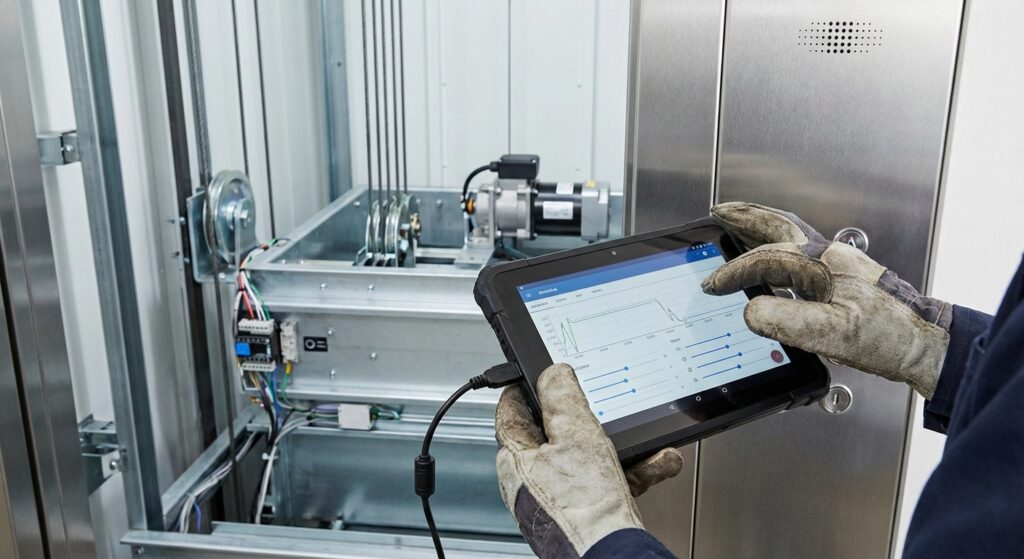
IoT-enabled elevator monitoring systems transmit real-time operational data to service centers, enabling predictive maintenance that reduces unexpected failures by 40-60% compared to traditional scheduled service approaches. Sensors monitor motor temperature, hydraulic pressure fluctuations, door cycle counts, and travel time deviations, generating maintenance alerts before component failures occur.
Singapore implemented advanced remote monitoring regulations in 2020, as documented by the Building and Construction Authority, requiring 24-hour operational status monitoring and constant malfunction detection. These systems reduce required manned inspection frequency from monthly to quarterly intervals after six-month functional evaluation certification. Dubai service contractors are increasingly adopting similar technologies, particularly for villa installations, where on-site monitoring proves impractical.
Cloud-based maintenance platforms compile performance data across multiple installations, identifying patterns that predict component wear and optimal replacement intervals. Building managers access real-time status displays through mobile applications, viewing elevator position, recent service history, and scheduled maintenance dates. Emergency communication systems integrate with smartphone networks, allowing passengers to contact monitoring centers or emergency services directly from elevator cabs during entrapment situations.
Regulatory Framework Evolution and Industry Standards
Elevator safety regulations continue evolving as technology advances and accident data informs updated requirements. South Korea’s Elevator Safety Management Act establishes comprehensive frameworks for manufacturing business registration, safety certification of elevator parts, and ongoing safety management obligations that extend throughout equipment operational life. Similar legislative models influence regulatory development across the Middle East, where rapid construction growth drives demand for robust safety oversight.
Hong Kong’s transition from the older Lifts and Escalators Ordinance (Cap. 327) to the modernized Lifts and Escalators Ordinance (Cap. 618) demonstrates regulatory evolution to address emerging technologies and strengthen personnel registration requirements. The updated framework, administered by the Buildings Department, extends legislative coverage, increases penalty levels for violations, and improves regulatory efficiency while maintaining rigorous safety standards that inform international best practices.
International standards organizations continue to harmonize elevator codes to facilitate global trade in equipment while maintaining local safety priorities. EN 81-20:2014 and EN 81-50:2014 establish European norms for elevator construction and component testing, while ASME A17.1 dominates North American markets. Dubai projects typically reference multiple international standards, selecting provisions that address local climate conditions, construction practices, and regulatory requirements while ensuring compatibility with globally-sourced equipment and components.
Future Trends and Technology Integration
Residential elevator technology is advancing toward greater energy efficiency, reduced spatial requirements, and an enhanced user experience through smart building integration. Regenerative drive systems capture energy during descent operations, feeding it back into building electrical systems and reducing net consumption by 25-40% compared to conventional brake-resistor designs. These systems are particularly effective in multi-story villas with frequent elevator use.
Destination dispatch algorithms, originally developed for commercial high-rise applications, adapt to residential settings by learning household traffic patterns and optimizing car positioning to minimize wait times. Machine learning systems analyze historical usage data to predict demand periods, pre-positioning elevators near frequently accessed floors during morning routines or evening entertainment hours.
Voice-activated controls and smartphone integration eliminate physical button interfaces, addressing hygiene concerns while improving accessibility for users with mobility limitations affecting hand function. Biometric authentication systems restrict access to authorized family members and approved guests, integrating with comprehensive home security networks to track movement throughout villas. These technologies align with broader smart home trends toward centralized control systems managing lighting, climate, security, and vertical transportation through unified interfaces.